

In this article:
- You’ll learn the 3 key criteria for choosing a colostrum supplement that most brands don’t talk about
- You’ll find out why many products contain so little IgG
- We’ll analyze the 5 best colostrum supplements available in the U.S.
We analyzed 26 products available on the U.S. market — including labels, Supplement Facts panels, product pages, FAQ sections, and every publicly available Certificate of Analysis.
We also reviewed what manufacturers disclose about where their colostrum comes from, how soon after calving it is collected, and how it is processed.
The results were worse than we expected.
Some of the best-known brands don’t disclose their IgG content at all. What’s more, two of them have built their marketing around explaining why you supposedly shouldn’t be asking about it.
And among the brands that do provide a number, none publishes an actual IgG test result for the specific batch you’re buying.
Instead, they cite the supplier’s raw-material specification — in other words, what the ingredient is supposed to contain, not what was actually measured in the finished batch.
This article will help you choose a colostrum supplement based on what it actually delivers, not simply on which brand makes the biggest promises.
Our expert

Dr. Robert Davies — an American internal medicine physician with more than 20 years of experience, specializing in preventive health and nutritional deficiency management.
Dr. Davies reviewed the formulations included in this ranking and helped develop the criteria used to evaluate each product.
What Is Colostrum?

Colostrum is the first milk produced by a cow after calving. It isn’t regular milk — its composition is different, and its primary role is to help the newborn calf develop immune protection.
The reason is simple: calves are born without adequate immune protection and must receive it through colostrum. That’s why bovine colostrum is exceptionally rich in immune compounds — it contains roughly 40 times more antibodies than human colostrum.
The most important of these are IgG immunoglobulins. These antibodies help neutralize bacteria and viruses in the digestive tract. The amount of IgG is one of the main factors determining the quality of a colostrum supplement.
Colostrum also contains lactoferrin, growth factors that support intestinal repair, and oligosaccharides that nourish beneficial gut bacteria.
To turn liquid colostrum into a supplement, it must be dried into a powder. Unfortunately, many colostrum products have one major problem.
The Problem: Three Things Determine Colostrum Quality — and Most Brands Don’t Disclose Any of Them
Colostrum isn’t a supplement where the number of milligrams alone tells you how good the product is. It’s a biological material whose value depends on three key factors.
1. IgG Immunoglobulin Dose
“3,000 mg of colostrum” tells you almost nothing about the product’s potency.
Bovine colostrum can contain anywhere from the low teens to more than 40% IgG, depending on the quality of the raw material and how it was processed. So the same 3,000 mg of colostrum could provide 450 mg of immunoglobulins — or 1,200 mg.
In our audit, some of the biggest brands in the category don’t disclose IgG content in either percentages or milligrams.
Instead, you get claims such as “400+ bioactive nutrients” or lists of compounds like “immunoglobulins, lactoferrin, growth factors” without any information about their actual amounts.
2. When the Colostrum Was Collected
A cow produces true colostrum only during the first hours after calving.
IgG concentration is highest in the first milking and drops rapidly with each subsequent milking. By the second milking, roughly 12 hours later, IgG levels may already be about half as high. After 24–48 hours, the secretion is no longer considered true colostrum but transitional milk.
Collecting colostrum during those first few hours is logistically difficult and expensive.
It’s considerably cheaper to collect material from the second or third milking or purchase pooled colostrum from a middleman.
As a result, two products that both claim to provide “3,000 mg of colostrum” may deliver completely different amounts of IgG.
3. How the Colostrum Is Processed
IgG immunoglobulins are large, delicate proteins. High temperatures can damage them.
Spray-drying is cheaper, but it exposes the raw material to temperatures that may affect IgG proteins.
Freeze-drying and low-temperature drying are designed to better preserve biological activity, but they’re considerably more expensive.
Once again, many brands provide very little information.
Some use proprietary process names that sound highly technical — but don’t disclose a single processing temperature.
Who May Benefit From Colostrum?

Adults With Weakened Immune Defenses
Colostrum is commonly used by people who get sick several times a year, take a long time to recover, or are regularly exposed to pathogens — whether at work, on public transportation, or during periods of chronic stress and insufficient sleep.
In a placebo-controlled study, young adults took colostrum for 45 days. Among medical students, who had greater exposure to infections, supplementation reduced both the number of days with upper respiratory tract infection symptoms and the severity of those symptoms.
For that reason, colostrum may help support the body’s natural defense mechanisms, particularly in people who are frequently exposed to pathogens [1].
Children During Cold and Flu Season
Research also suggests that colostrum may support immune health in children.
In one study involving children ages 3–7, participants took colostrum for 45 days before the respiratory infection season [2].
The supplemented group experienced 31% fewer upper respiratory tract infection symptoms and a 37% reduction in symptom severity, with the effect lasting for up to 20 weeks after supplementation ended.
A practical time to start giving children colostrum is before they return to daycare or preschool.
People With Digestive Issues
Colostrum contains growth factors that support regeneration of the intestinal lining as well as immunoglobulins that act locally within the digestive tract.
A review of the research suggests that it may help support the intestinal barrier, including in inflammatory bowel conditions and in cases of intestinal mucosal damage caused by anti-inflammatory medications or intense exercise.
It’s also commonly used by people dealing with bloating, irritable bowel syndrome, or digestive issues following antibiotic treatment [3].
People Focused on Skin Health
Colostrum is also appearing more frequently in anti-aging skin care products as a natural source of peptides, lipids, and growth factors associated with skin regeneration.
In a study involving 52 women ages 40–70, a colostrum cream used for 8 weeks improved skin hydration, softness, and overall appearance compared with placebo.
Participants also reported less redness and reduced skin sensitivity [4].
That’s why colostrum is increasingly being used in products designed for dry, sensitive, and mature skin.
The 3 Most Important Criteria for Choosing Colostrum

1. IgG Immunoglobulin Dose
The most important factor isn’t simply how much colostrum is in a serving — it’s how much IgG the product actually provides.
For example, 1,000 mg of colostrum standardized to 30% IgG provides 300 mg of IgG.
If the manufacturer only tells you “1,000 mg of colostrum,” there’s no way to know how many active immunoglobulins you’re actually getting.
Look for products standardized to at least 20–30% IgG. 30% or higher is a strong result.
Practical tip: Calculate the cost per gram of IgG, not the cost per serving.
A supplement that costs $1.00 per day but doesn’t disclose its IgG content may provide fewer immunoglobulins than one that costs $2.00 and clearly states its IgG dose.
And if the manufacturer doesn’t provide the number, you simply can’t calculate it — which tells you something in itself.
2. Freshness of the Raw Material: Time From Calving to Collection
The sooner colostrum is collected after calving, the more immunoglobulins it generally contains.
The best supplements use colostrum from the first milking, collected within the first 6 hours.
A collection window of up to 12 hours is still reasonable.
A claim such as “collected within the first 24 hours” means the material may have come from the second or third milking, when IgG levels are already significantly lower.
A complete lack of information about collection time is a red flag.
Collecting first-milking colostrum within a few hours of calving creates real costs for the manufacturer — so companies that actually do it almost always advertise it.
Also pay attention to whether a brand’s claims are consistent.
During our audit, we found one manufacturer whose science page said the colostrum was collected within the “first 4–6 hours,” while its product page and FAQ said “within the first 24 hours.”
3. Sourcing and Drying Method
The third criterion covers everything that happens to the raw material between the cow and the container.
Where does it come from? Look at the country of origin, type of farm, grass-feeding practices, and policies regarding hormones and antibiotics. Some brands don’t disclose the country of origin at all — which is a meaningful omission for an animal-derived product.
Calf-first policy. Is the calf fed first, with only the surplus colostrum used for production? This matters both ethically and from a quality perspective — surplus from the first milking still comes from that earliest, most valuable collection.
Processing method. Low-temperature drying and freeze-drying are designed to protect immunoglobulins. Spray-drying is cheaper and generally involves higher process temperatures.
The key question is: Does the manufacturer disclose an actual temperature?
A proprietary process name without a number doesn’t guarantee anything.
Contaminant testing. Colostrum is a concentrated dairy product, which makes heavy metal testing worth paying attention to. Look for a publicly available Certificate of Analysis, ideally for the specific batch, with results for lead, arsenic, cadmium, and mercury.
How We Conducted Our Analysis
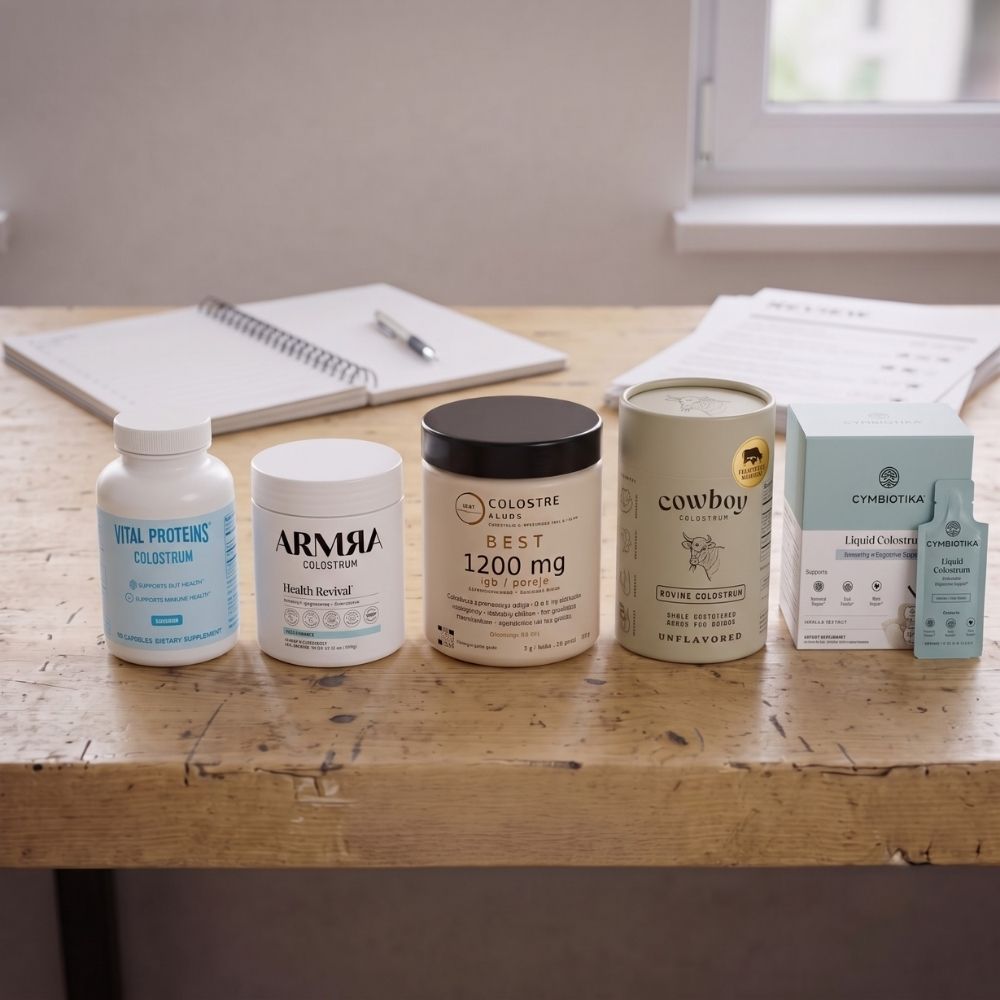
Our ranking was based on the three criteria above, along with additional factors affecting convenience and safety.
We analyzed 26 products and selected 5 of the most popular colostrum supplements on the U.S. market.
Here’s what we did:
- For each product, we calculated the actual amount of IgG per daily serving — in milligrams, not percentages
- We calculated the cost per gram of immunoglobulins, rather than simply the cost per serving
- We checked whether the stated IgG level came from a supplier specification or an actual batch test
- We verified claims about how soon after calving the raw material was collected and looked for inconsistencies across pages from the same manufacturer
- We checked whether the manufacturer disclosed an actual processing temperature, rather than only a proprietary technology name
- We downloaded and reviewed every publicly available Certificate of Analysis, checking what each document actually tested
- We reviewed the formulations and evaluation criteria with Dr. Robert Davies
- We analyzed independent customer reviews as well as industry and consumer publications related to product safety
Ranking the 5 Best Colostrum Supplements of 2026
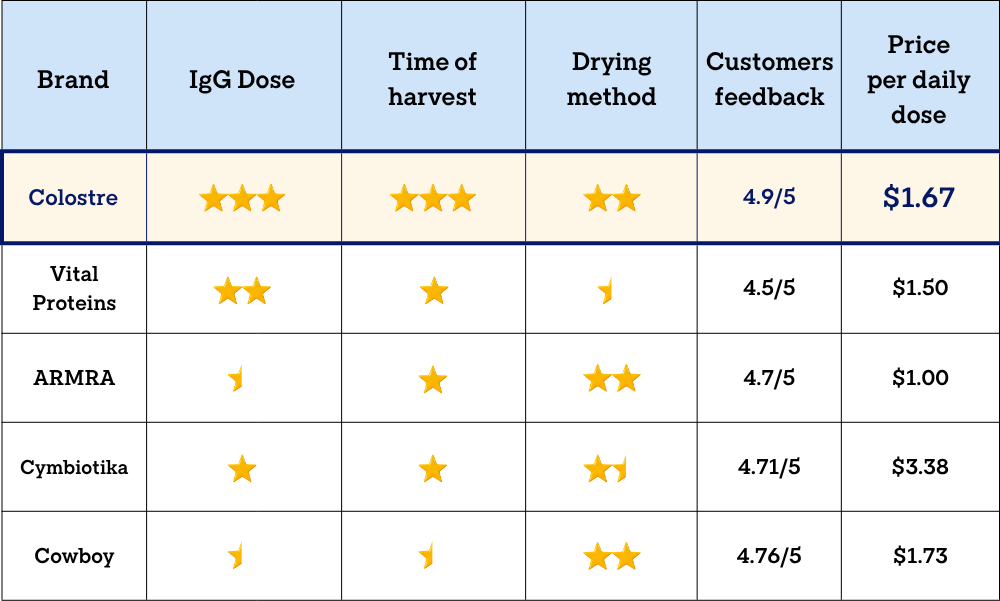
#1 Winner — COLOSTRE Best™
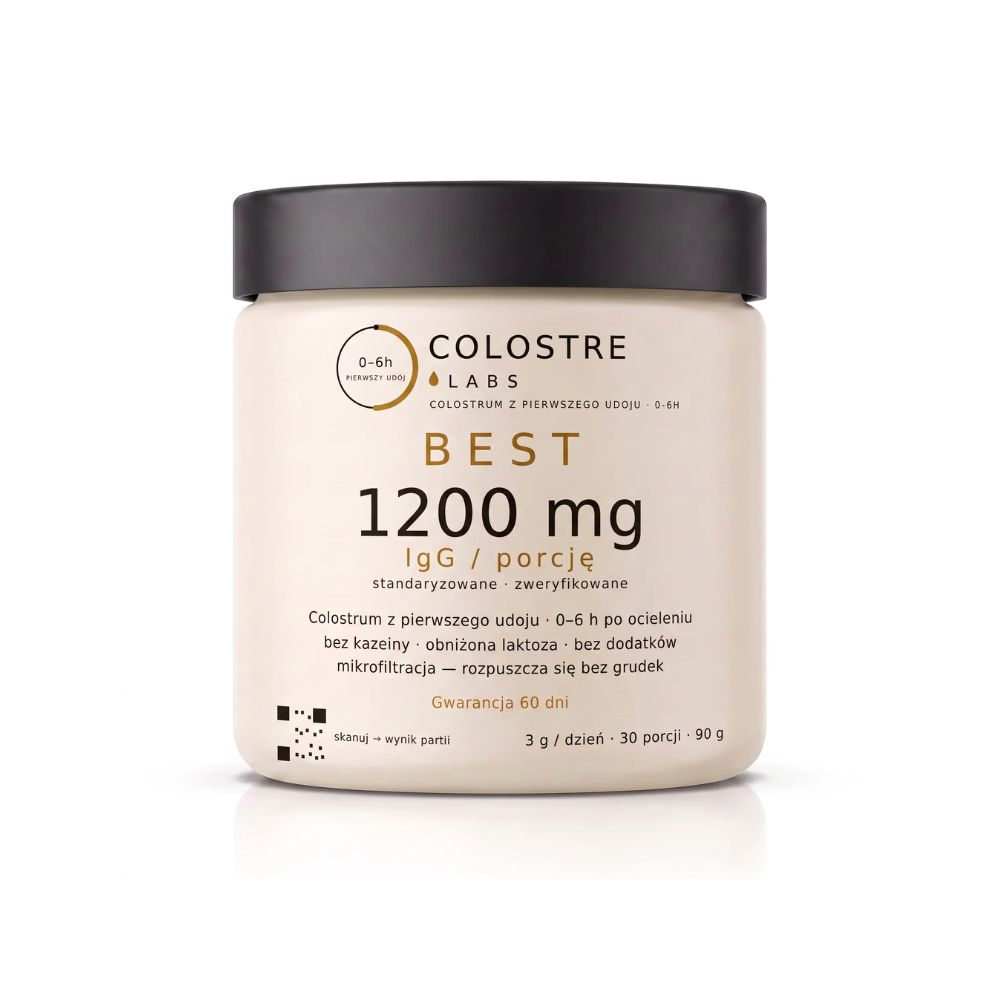
COLOSTRE Best™ earned the #1 spot as the only product in this ranking that meets all three major criteria at the same time — and the only one where the immunoglobulin content is based on an actual batch-specific test rather than simply a specification.
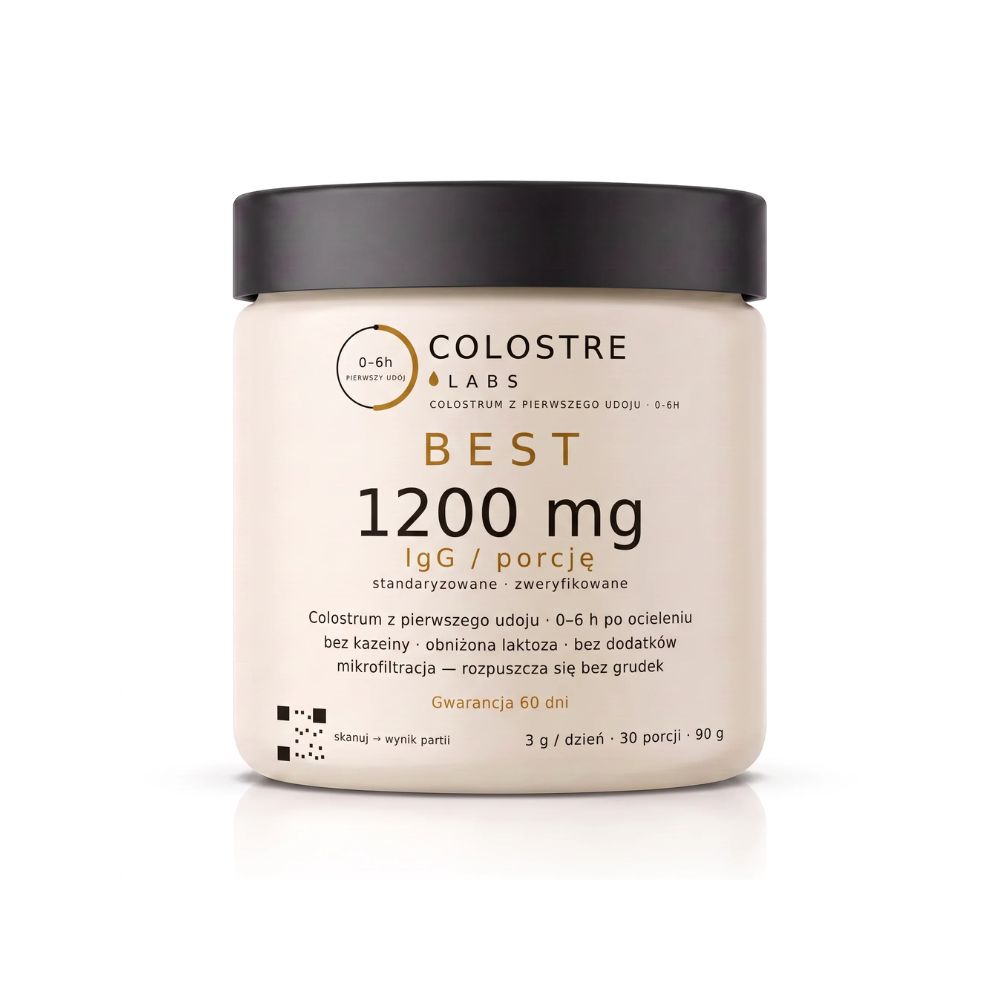
One serving provides 3,000 mg of colostrum, including 1,200 mg of IgG immunoglobulins.
Highest Verified IgG Dose
One serving contains:
- 3,000 mg of colostrum
- Standardized to a minimum of 40% immunoglobulins
- 1,200 mg of IgG
That’s the highest IgG dose among the products in this ranking that disclose the number at all.
By comparison, two of the most popular products on this list don’t disclose their IgG content at all.
Every Batch is Tested
This is the most important difference between COLOSTRE and the other products.
Every batch comes with its own Certificate of Analysis.
By scanning the QR code on the packaging, you can check:
- IgG content in that specific batch
- Lactose level
- Microbiological testing results
- Heavy metal levels
- The batch number tested
Across our entire audit, we did not find another product that gives customers access to a batch-specific IgG test result.
Other brands either don’t disclose a number at all, rely on the supplier’s raw-material specification, or — in one case — publish a legitimate Certificate of Analysis from an accredited laboratory that simply doesn’t include IgG testing.
The difference matters:
A specification tells you what the manufacturer expected to get.
A batch test tells you what you actually received.
First Milking, 0–6 Hours
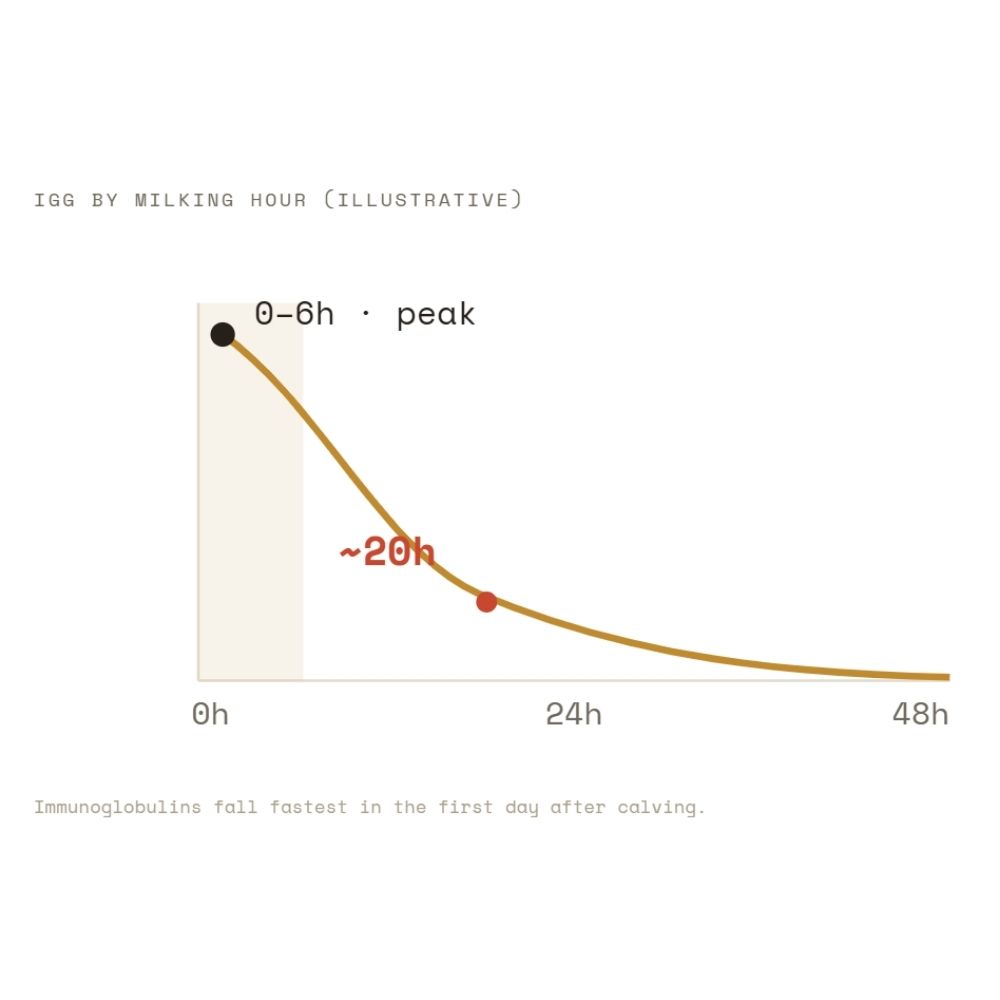
The raw material comes exclusively from the first milking and is collected within 0–6 hours after calving — the narrowest collection window among the products in this ranking.
The manufacturer also follows a calf-first policy: the calf is fed first, and only surplus colostrum is used for production.
Low-Temperature Drying
The colostrum is dried using the proprietary ColdLock™ process, which is designed to protect immunoglobulins from denaturation.
The product contains no sweeteners or fillers, has reduced lactose content, contains no casein, and dissolves easily in cold water.
One serving is 3 g of powder.
Dosage and Cost
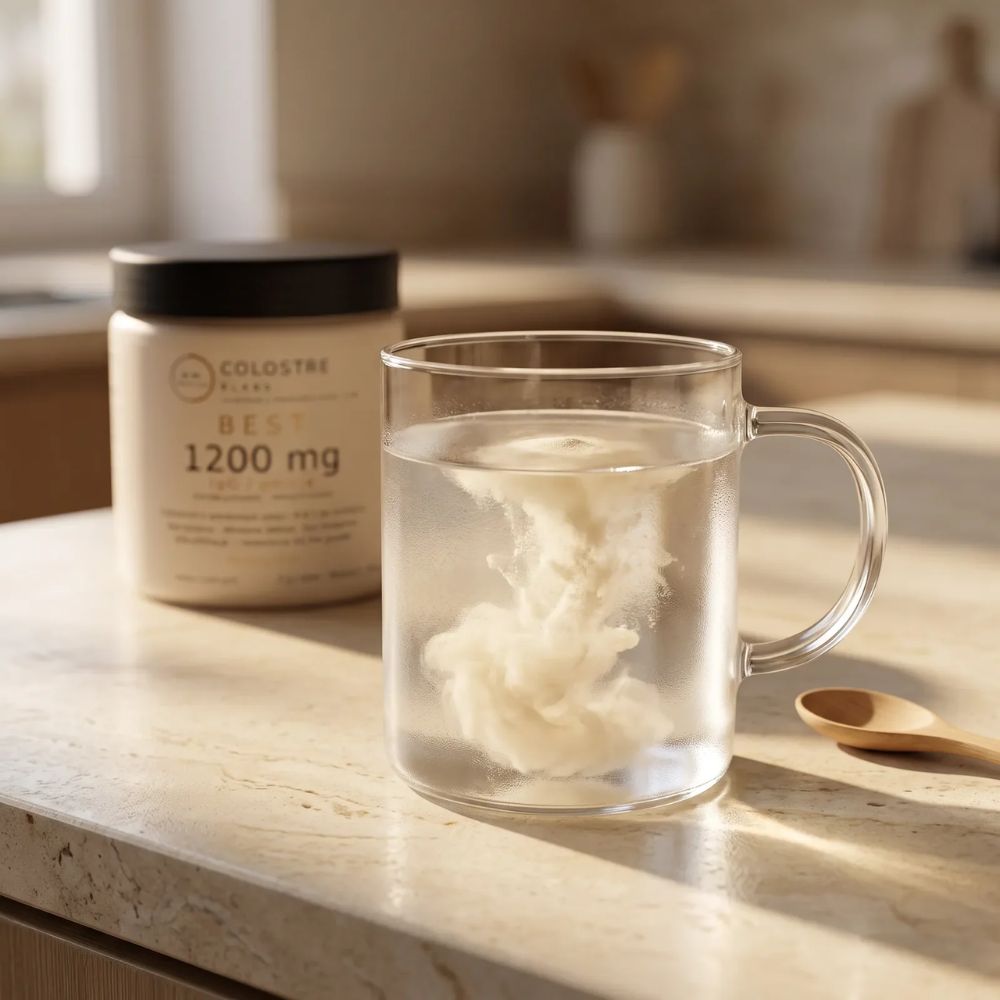
The recommended serving is 3 g per day.
Each container provides 30 servings.
Cost per gram of IgG: $1.39 — which is the fairest way to compare colostrum products.
For two products in this ranking, this number can’t be calculated at all because the manufacturers don’t disclose their immunoglobulin content.
Summary
Pros:
- 1,200 mg of IgG per serving — the highest verified dose in the ranking
- IgG tested in every batch, with results available through a QR code
- Standardized to a minimum of 40% immunoglobulins
- First-milking colostrum collected 0–6 hours after calving
- Calf-first policy
- Proprietary low-temperature ColdLock™ drying process
- Certificate also includes heavy metal and microbiological testing
- Reduced lactose
- Casein-free
- No sweeteners or fillers
- 60-day money-back guarantee
Cons:
- One container lasts 30 days
- Primarily available online
→ Check Out COLOSTRE Best™
#2 Vital Proteins Colostrum
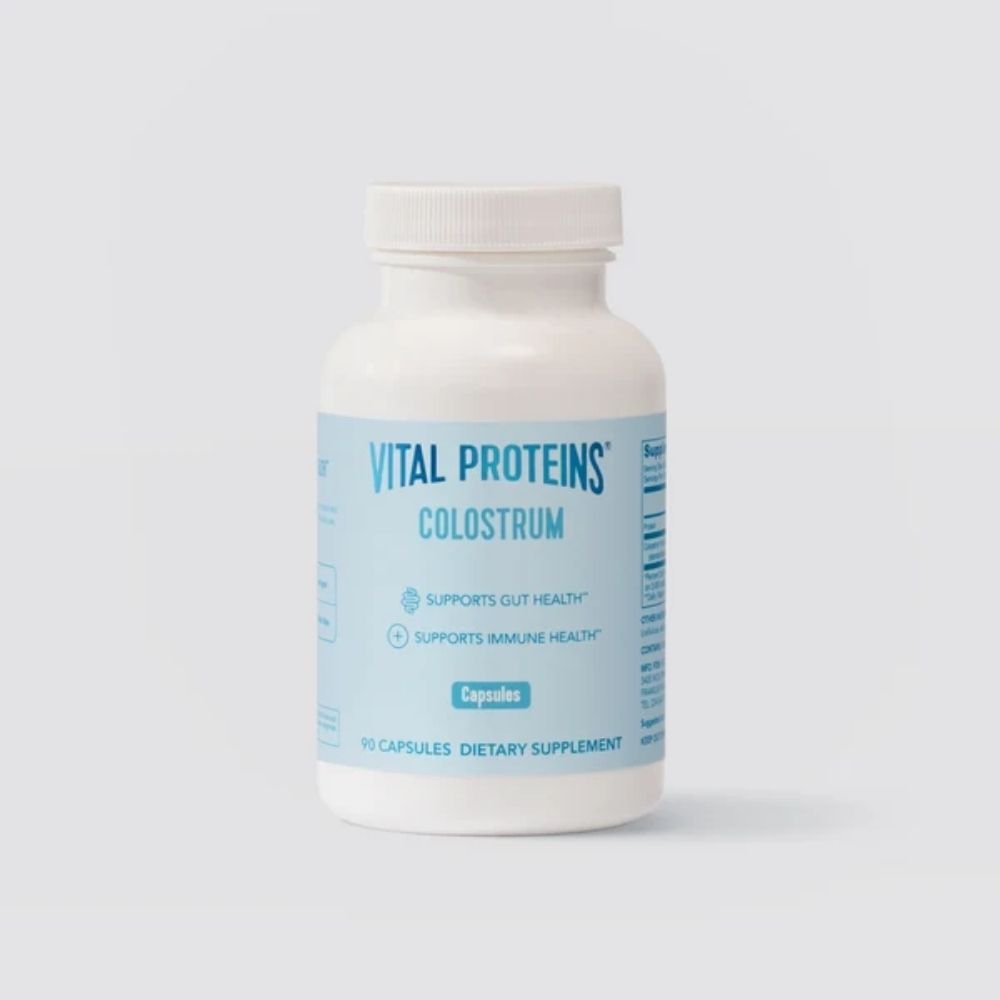
Vital Proteins earned second place as the only major brand in this ranking that clearly discloses standardization for immunoglobulins.
The brand is owned by Nestlé, and the product launched in January 2025.
It’s the most mainstream option in this ranking — widely distributed and backed by a major manufacturer.
Disclosed IgG Content
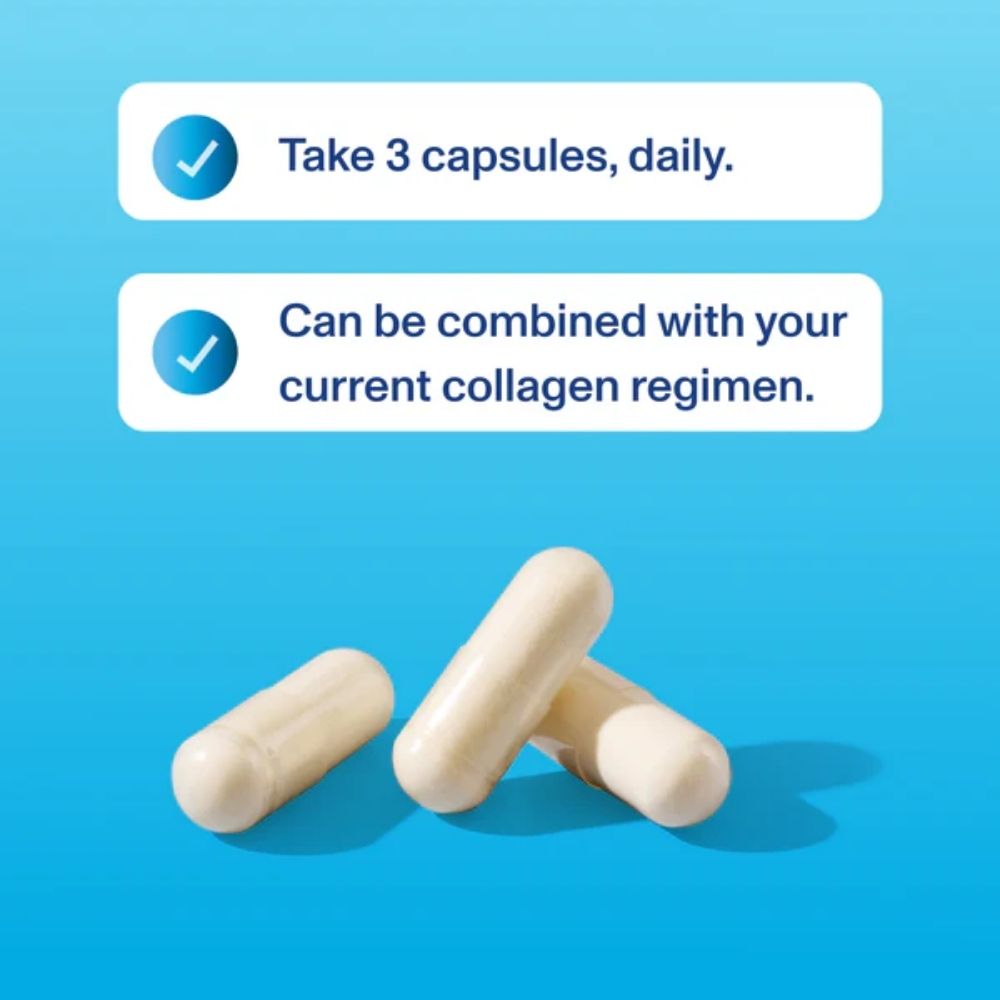
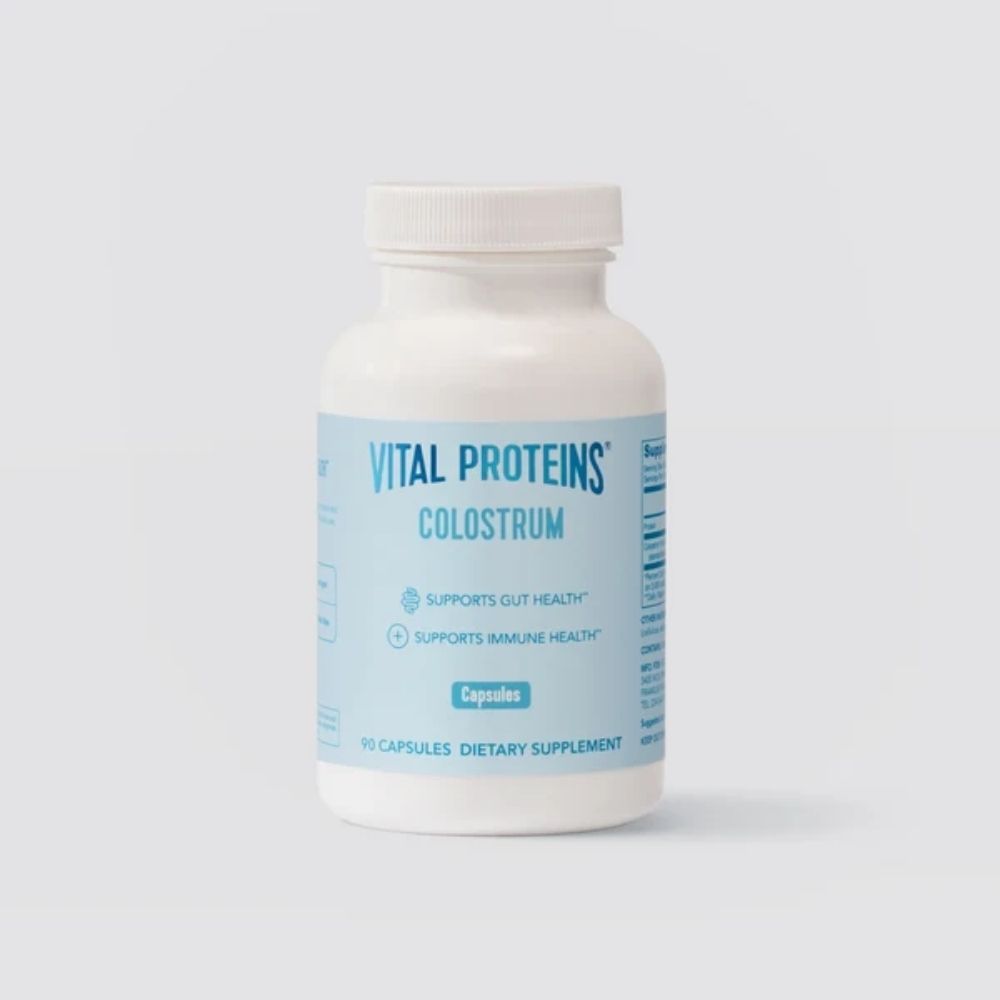
The manufacturer states that the product contains 40% bioactive IgG.
With a 3-capsule serving providing 1,350 mg of colostrum, that works out to approximately 540 mg of immunoglobulins.
That’s a solid amount and — more importantly — it’s an actual number.
In a category where some of the best-known brands don’t disclose any IgG number at all, transparency alone is an advantage.
The limitation: the 40% figure is a raw-material standardization, not an actual test result from the specific batch.
The manufacturer does not publish a Certificate of Analysis showing measured IgG content.
What’s Missing
This is where the weaknesses begin — and they affect the other two major criteria.
Vital Proteins doesn’t disclose how soon after calving its colostrum is collected.
There’s no way to tell whether the raw material comes from the first milking or a later one.
On the product page, we also found no information about the country of origin of the raw material or the drying method.
For an animal-derived product, those are significant gaps.
There is also no stated calf-first policy.
Form and Convenience
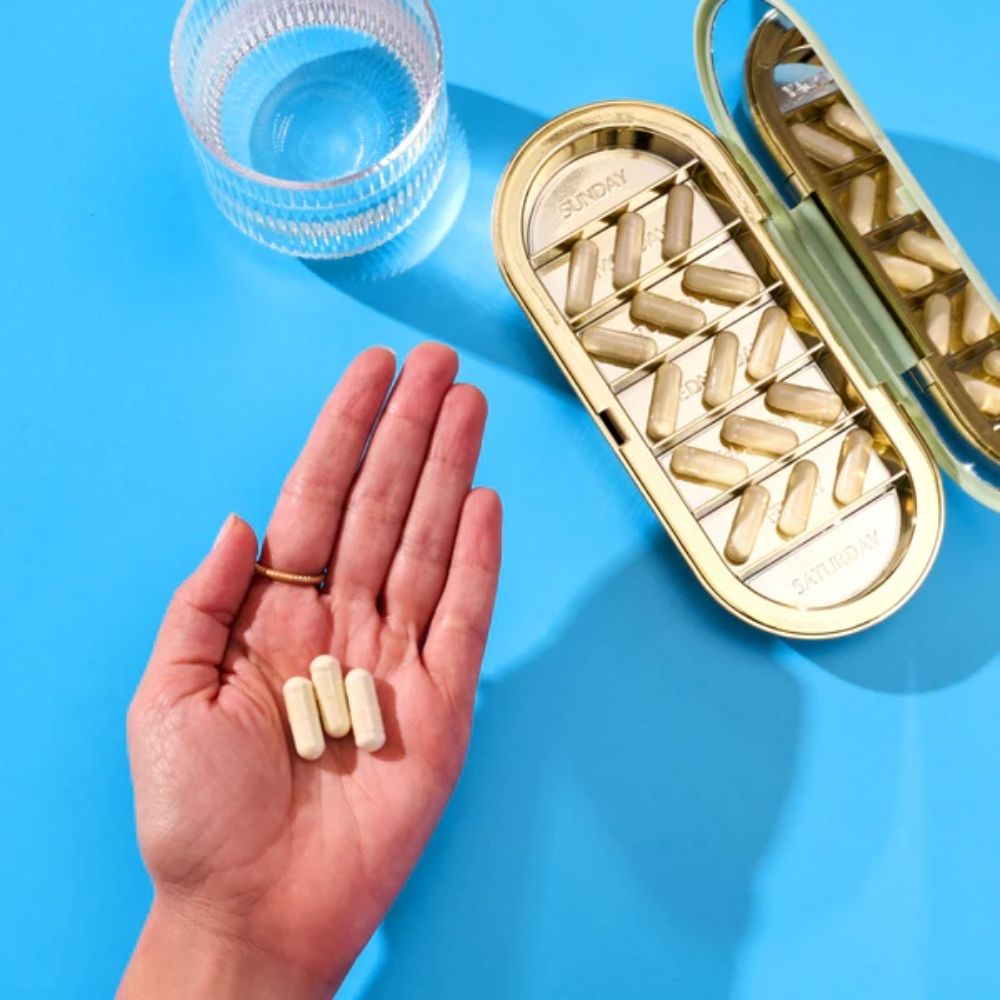
Capsules are convenient for people who dislike the natural taste or smell of colostrum.
However, they don’t allow for flexible dosing — one serving is fixed at 3 capsules.
Dosage and Cost
One serving is 3 capsules per day.
Each bottle contains 30 servings.
At approximately $45.00, that’s $1.50 per serving and approximately $2.78 per gram of IgG.
Summary
Pros:
- Clearly disclosed standardization: 40% bioactive IgG
- 540 mg of immunoglobulins per serving
- Major brand backed by Nestlé
- Wide distribution and easy availability
- Convenient capsule format
- Reasonable cost per gram of IgG
Cons:
- No information about collection time after calving
- No information about the country of origin of the raw material
- No information about the drying method
- No calf-first statement
- 40% is a raw-material specification, not a batch-specific result
- No publicly available Certificate of Analysis
- Fixed dosing with no easy way to divide the serving
→ Check Out Vital Proteins Colostrum
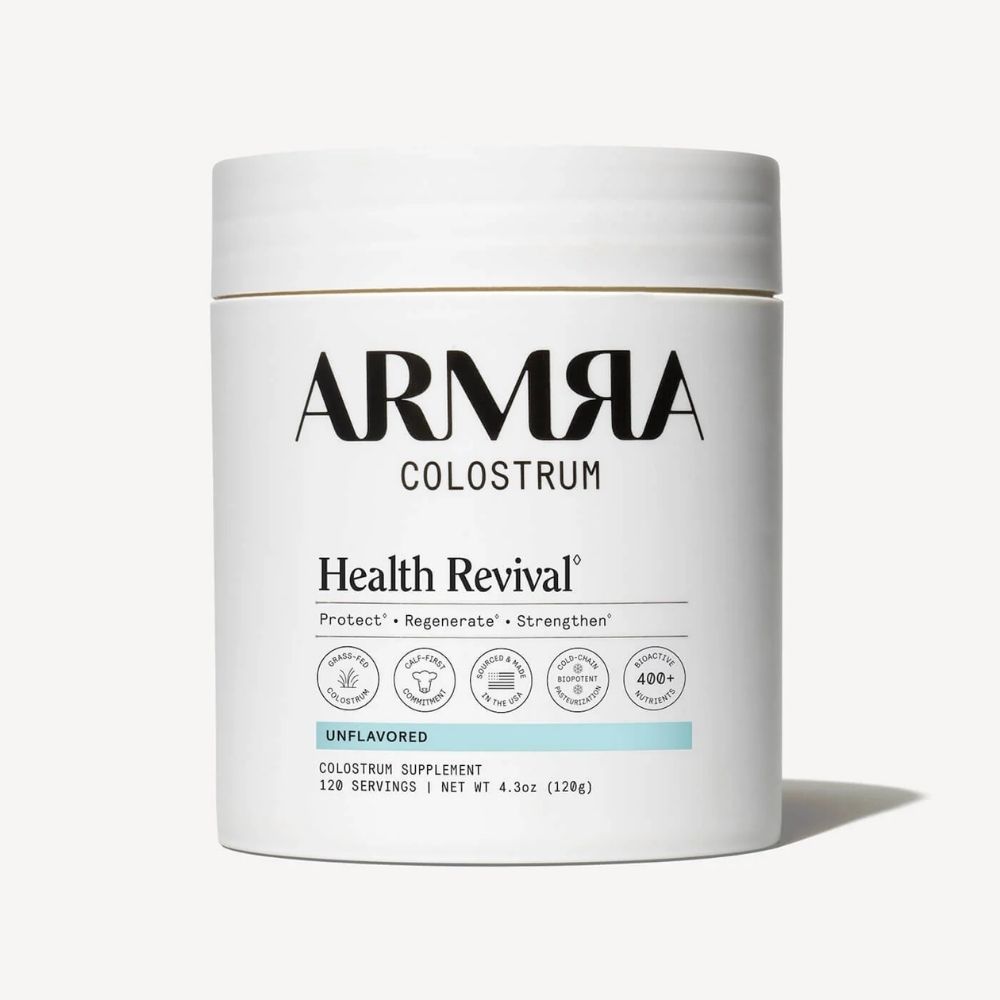
#3 ARMRA Colostrum
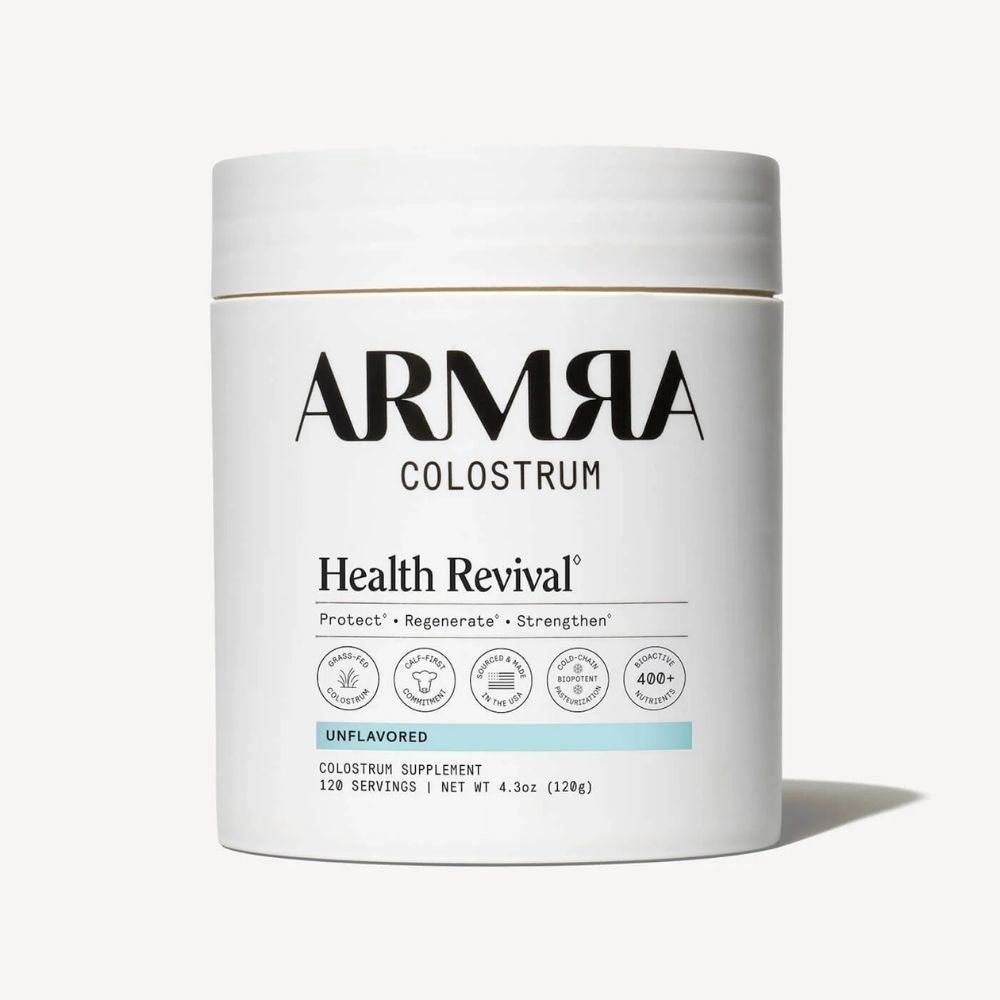
ARMRA is one of the most recognizable colostrum brands in the United States, with more than 15,000 reviews and an average rating of 4.7/5 on its own website.
When it comes to sourcing claims, it performs very well.
Its third-place ranking comes down to one major issue.
Strong Point: Raw-Material Sourcing
This is where ARMRA provides more detail than most competitors.
Its colostrum comes from U.S. family farms and grass-fed cows raised without hormones or antibiotics.
The product is certified glyphosate-free and non-GMO.
The brand also clearly states a calf-first policy, explaining that it uses only surplus colostrum remaining after the calves have been fully fed.
Those are strong, specific claims — better than what most products in this ranking provide.
Weak Point: No IgG Number at All
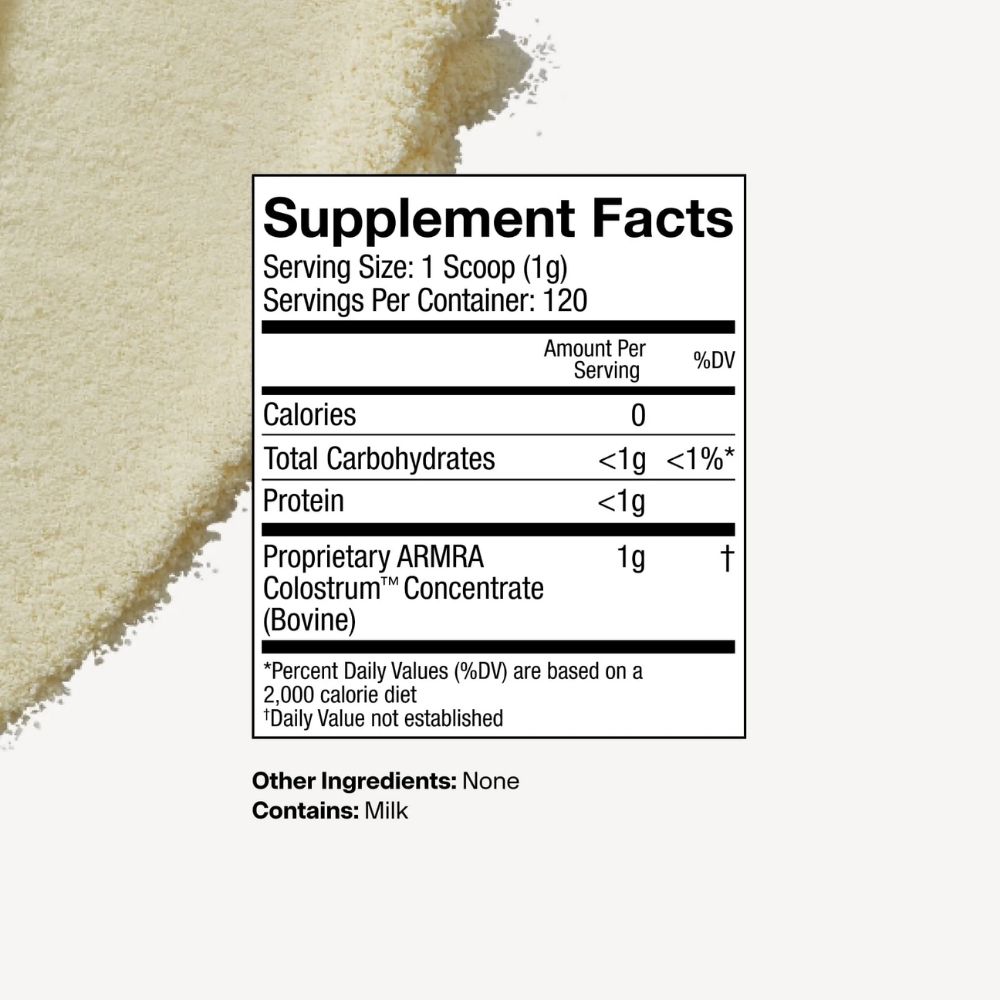
ARMRA doesn’t disclose its immunoglobulin content anywhere — not as a percentage, not in milligrams, not on the product page, and not on its science pages.
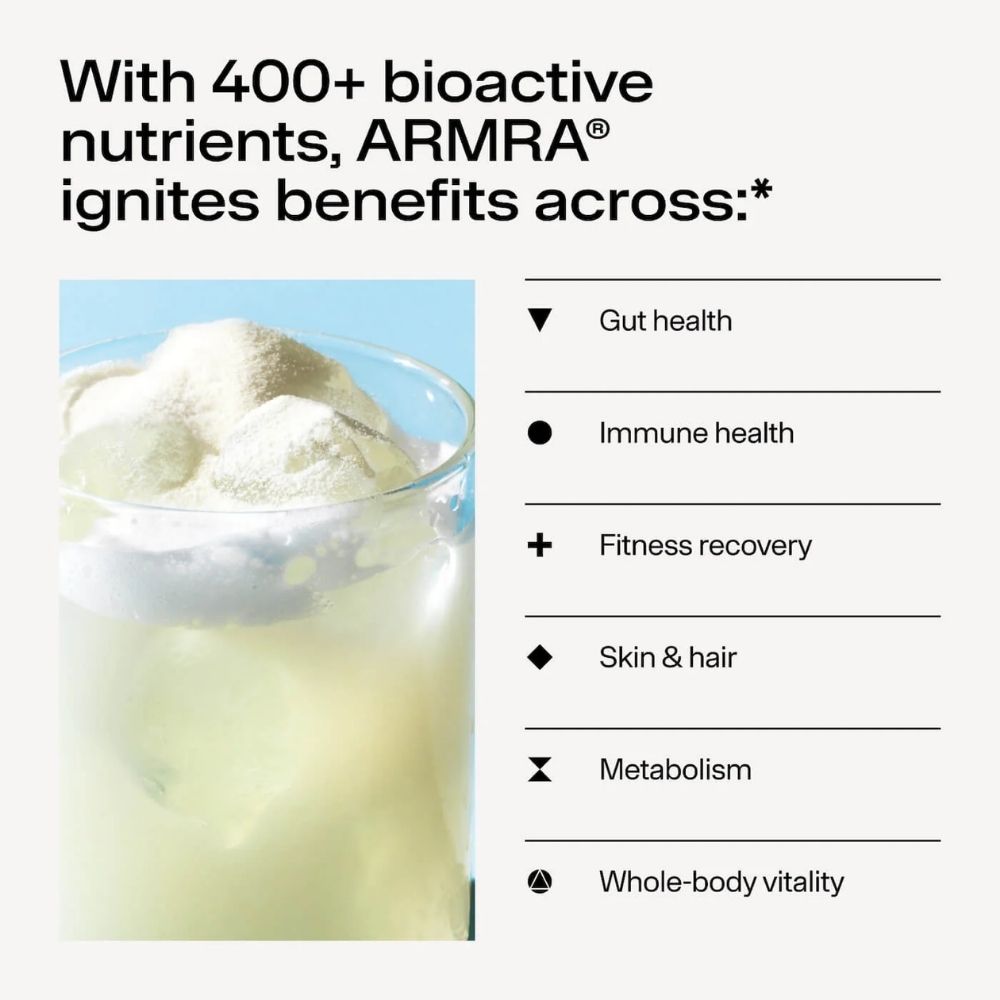
Instead, the brand focuses on claims such as “400+ bioactive nutrients” and qualitative lists of compounds including immunoglobulins, lactoferrin, IGF-1, TGF-β, and oligosaccharides.
None of them comes with a quantity.
The brand even argues that standardizing colostrum to IgG is an inferior approach because it produces a “depleted” product.
It’s a consistent marketing position — but it also removes the need to provide a measurable, verifiable potency number.
This isn’t only our observation.
When Fortune reviewed colostrum supplements, it listed “Unclear how much IgG per serving” as a drawback of ARMRA, noting that without that information, it’s difficult to assess product potency [4].
No Collection Time or Processing Temperature
ARMRA doesn’t disclose how soon after calving its colostrum is collected.
The company uses the proprietary term “Cold-Chain BioPotent™ Pasteurization,” but doesn’t publish an actual temperature.
We checked the product page, the company’s colostrum science page, and its methodology information.
“Cold-chain” remains a marketing term rather than a measurable process specification.
The manufacturer says its product is tested for heavy metals, glyphosate, and microbiological contaminants at ISO-certified laboratories, but doesn’t publish a Certificate of Analysis, identify the laboratory, or provide batch-level verification.
The Dosage Issue
The exact serving size isn’t entirely clear from the manufacturer’s website.
The container provides 120 servings with a net weight of 180 g, which works out to approximately 1.5 g per serving.
However, other sections recommend “4+ scoops,” while a referenced study mentions 2 g per day.
With an unknown IgG concentration and a serving size somewhere around 1–2 g, the actual amount of immunoglobulins delivered remains unknown.
Dosage and Cost
A jar containing 120 servings costs $119.99, or approximately $1.00 per serving.
The cost per gram of IgG cannot be calculated because the manufacturer doesn’t disclose the immunoglobulin content.
Summary
Pros:
- Strong sourcing claims: U.S. family farms and grass-fed cows
- Glyphosate-free certification, non-GMO, no hormones or antibiotics
- Clearly explained calf-first policy
- Low cost per serving
- Largest review base in the category — more than 15,000 reviews with a 4.7/5 rating
- No fillers or anti-caking agents
Cons:
- No disclosure of IgG content whatsoever — neither percentage nor milligrams
- Impossible to calculate cost per gram of immunoglobulins
- No information about collection time after calving
- Proprietary processing name with no disclosed temperature
- No publicly available Certificate of Analysis or batch verification
- Unclear serving size and inconsistent dosing recommendations
→ Check Out ARMRA Colostrum
#4 Cymbiotika Liquid Colostrum
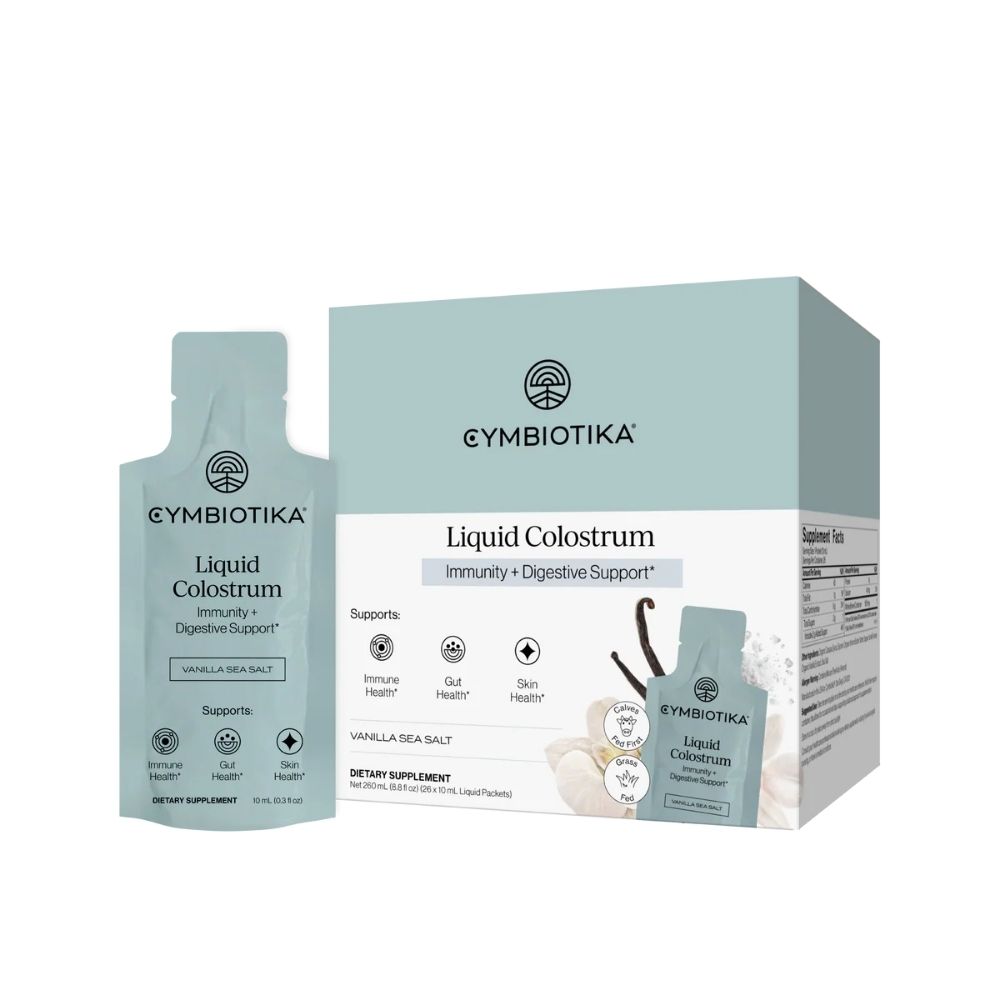
Cymbiotika is the only product in this ranking offered in liquid form — colostrum packaged in vanilla-salted gel pouches.
The brand positions itself in the premium segment and has the strongest contaminant-testing documentation in this ranking.
Its biggest weaknesses are dosage and price.
Low IgG Dose
The manufacturer does disclose its immunoglobulin content, but in an unusual place — inside a table comparing its product with competitors.
According to that table, the product contains 21% IgG with 1,500 mg of colostrum, equal to 315 mg of immunoglobulins per serving.
That’s the lowest amount among the products that disclose an IgG number at all — almost four times less than the winner.
We appreciate the transparency: the brand openly acknowledges its lower standardization.
But that doesn’t change the math.
Certificate of Analysis — Best in the Ranking, But With One Major Gap
Cymbiotika is the only brand in this ranking that publishes a real Certificate of Analysis for a specific batch, issued by an accredited third-party ISO/IEC 17025 laboratory and signed by the laboratory manager.
The certificate includes testing for four heavy metals using ICP-MS, a full microbiological panel, and allergen testing.
There is, however, an important gap.
The product page states that every batch is tested for “IgG and protein” — yet the published certificate doesn’t include a result for either one.
This is a good example of the problem described at the beginning of this article:
Even a brand that conducts legitimate, batch-specific testing doesn’t necessarily measure the component people are primarily buying colostrum for.
Ingredients and Format

The liquid format is convenient and doesn’t require mixing.
However, it also has the most complicated ingredient list in the ranking:
Whole Bovine Colostrum, organic cassava syrup, glycerin, organic almond butter, water, organic vanilla powder, vanilla extract, sea salt.
The first ingredient after colostrum is cassava syrup — in other words, sugar.
The product also contains almonds and milk, two major allergens.
The manufacturer doesn’t disclose its preservation method or processing temperature, which is a meaningful omission for a product containing water.
Its bioavailability argument is based mainly on the liquid format rather than data showing how well the immunoglobulins survive processing.
Sourcing
The raw material comes from the U.S., from grass-fed cows, with a calf-first policy and no antibiotics.
However, the brand doesn’t disclose how soon after calving the colostrum is collected.
Dosage and Cost
One package contains 26 individual 10 mL pouches.
At $88.00 ($79.20 with a subscription), that works out to $3.38 per serving.
At 315 mg of IgG per serving, the cost is approximately $10.73 per gram of immunoglobulins — by far the most expensive in this ranking.
Summary
Pros:
- Real batch-specific Certificate of Analysis from an accredited ISO 17025 laboratory
- Comprehensive ICP-MS heavy metal testing, microbiological testing, and allergen panel
- Disclosed IgG content: 315 mg
- Convenient liquid format with no mixing required
- U.S.-sourced colostrum, grass-fed cows, calf-first policy
Cons:
- Highest cost per gram of IgG in the ranking — approximately $10.73
- Lowest immunoglobulin dose among products that disclose it
- Certificate doesn’t include IgG despite the product page saying it is tested
- Cassava syrup is the first ingredient after colostrum
- Contains almonds and milk — two major allergens
- No information about collection time after calving
- No information about preservation method or processing temperature
→ Check Out Cymbiotika Liquid Colostrum
#5 Cowboy Colostrum
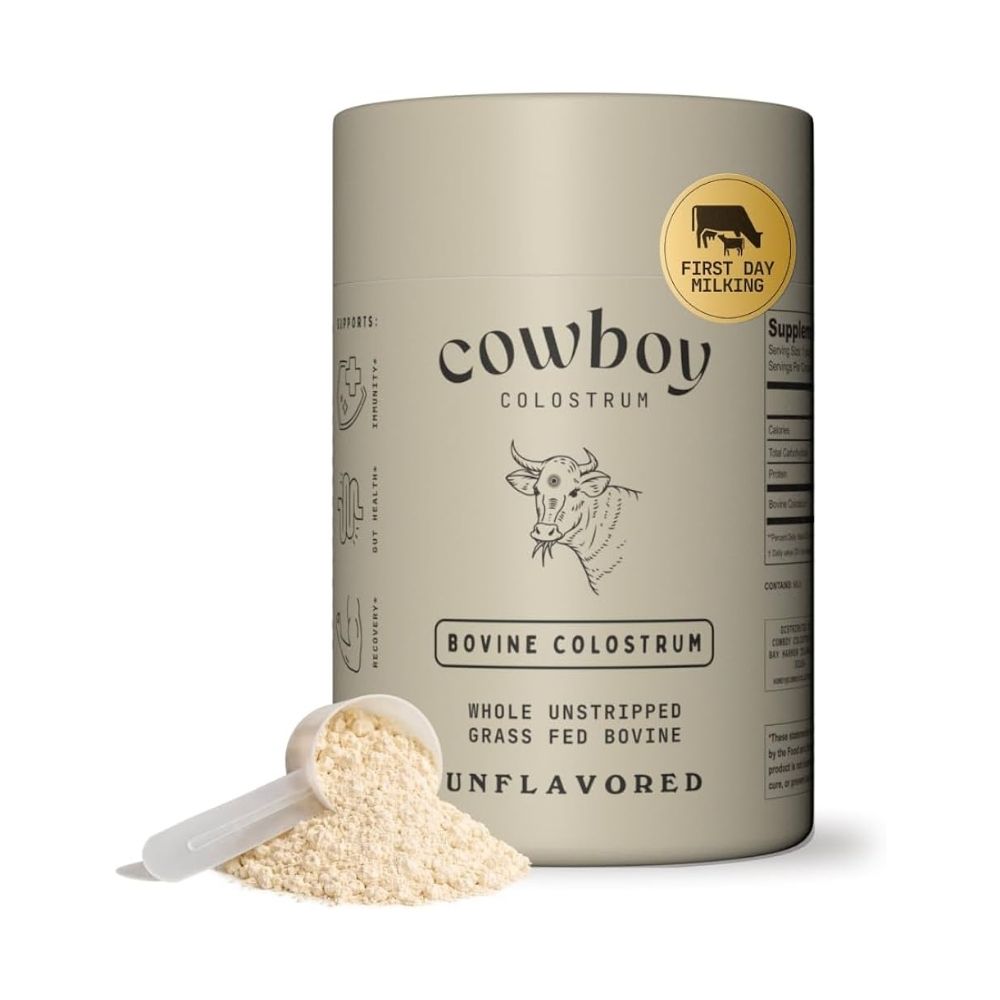
Cowboy Colostrum is a highly recognizable brand built largely through social media and is available in both unflavored and flavored varieties.
It finishes last in our ranking because it performs worse across all three major criteria.
No Information About IgG
Like ARMRA, Cowboy doesn’t disclose its immunoglobulin content anywhere — not as a percentage and not in milligrams.
We checked its product pages, FAQ, and science section.
Its marketing focuses on statements such as “hundreds of bioactive ingredients” and “filled with antibodies.”
The brand positions “whole” and non-defatted colostrum as superior to products standardized for IgG — which, as with ARMRA, conveniently removes the need to provide a measurable IgG number.
Conflicting Collection-Time Claims
This is the most problematic part.
The company’s science page says its colostrum is collected “exclusively within the first 4–6 hours.”
Meanwhile, the same manufacturer’s product pages and FAQ say “within the first 24 hours.”
The difference between these collection windows is significant when it comes to immunoglobulin concentration, yet the manufacturer currently presents both claims.
High-Temperature Spray-Drying
Cowboy is the only brand in this ranking that directly discloses its processing parameters: spray-drying at 161°F (approximately 72°C) for 15 seconds.
We appreciate the transparency.
The manufacturer defends the decision by stating that it tested both approaches and achieved better results with spray-drying.
Heavy Metal Concerns
In February 2026, ConsumerLab reported detecting lead and arsenic above its established Action Levels in Cowboy Colostrum [5].
Separately, in January 2026, independent researcher Tamara Rubin published test results for the vanilla version that detected low levels of lead and arsenic.
She noted that two other colostrum products she tested did not show detectable lead [6].
The manufacturer says it tests batches for heavy metals, pesticides, and glyphosate, but doesn’t publish a Certificate of Analysis or identify the testing laboratory.
Sourcing and Ingredients
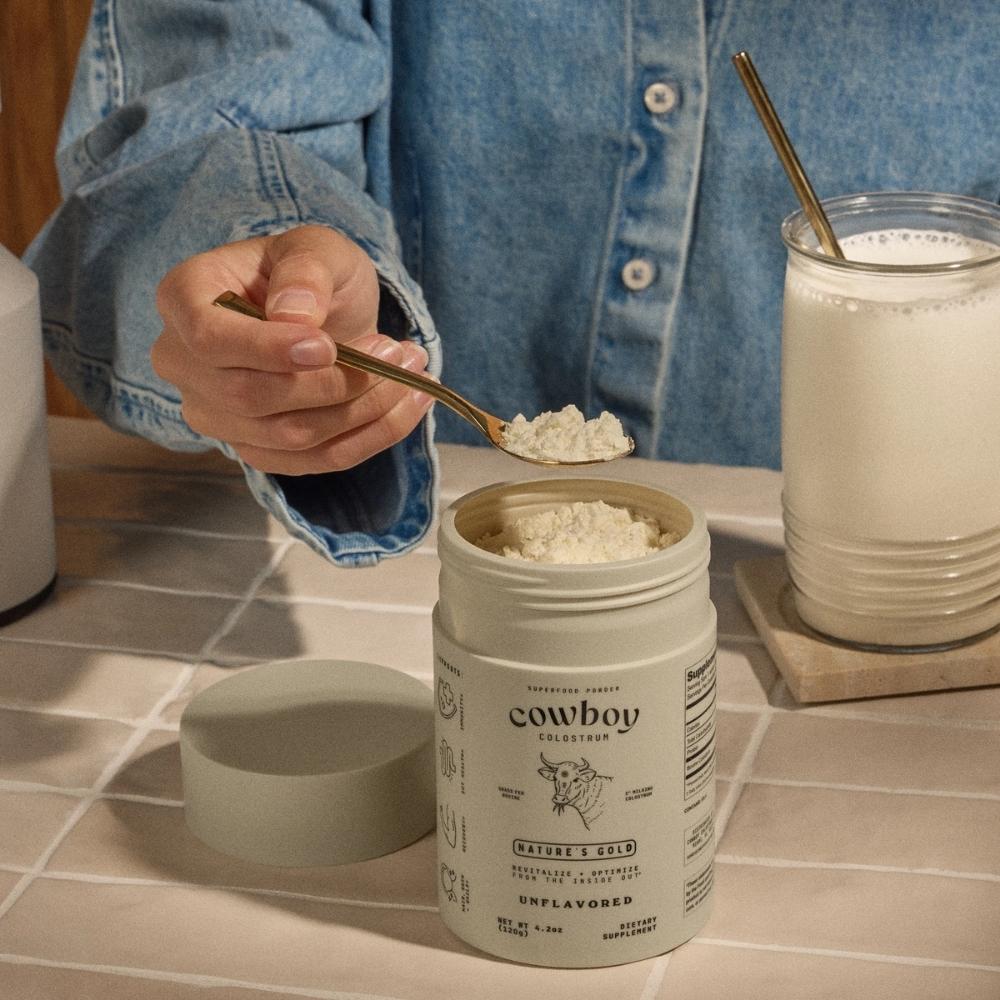
The raw material comes from the U.S. and from grass-fed cows — although the manufacturer clarifies that the cows graze as long as weather permits and are fed hay during winter.
The brand follows a calf-first policy.
Antibiotics may be used “when cows are sick.”
The product contains both A1 and A2 proteins as well as casein.
Flavored versions also contain cocoa, monk fruit extract, and sea salt.
For those flavored products, the claim of 3,000 mg of colostrum in a 3-gram scoop raises an obvious mathematical question — the added flavor ingredients have to account for some portion of the scoop’s total weight.
Dosage and Cost
One scoop is 3 g.
Each container provides 40 servings.
At $69.00, the cost is $1.73 per serving.
The cost per gram of IgG cannot be calculated.
Summary
Pros:
- Specific processing temperature and time disclosed — more transparency than some competitors
- U.S.-sourced colostrum from grass-fed cows, with a calf-first policy
- “Whole colostrum” approach without defatting
- Flavored versions sweetened only with monk fruit extract, with no gums or fillers
- Moderate cost per serving
Cons:
- No information whatsoever about IgG content
- Conflicting collection-time claims: 4–6 hours vs. 24 hours on pages from the same manufacturer
- Spray-dried at 161°F — the most aggressive heat processing in the ranking
- Reports of lead and arsenic above Action Levels (ConsumerLab, February 2026)
- No publicly available Certificate of Analysis
- Contains casein and A1 protein
- Claimed colostrum content in flavored versions raises mathematical questions
→ Check Out Cowboy Colostrum
Comparison of All Products
The ranking shows just how different these products really are.
First place — COLOSTRE Best™. The only product where the immunoglobulin content is based on a specific batch test rather than simply a manufacturer or supplier claim. It provides 1,200 mg of IgG, first-milking colostrum collected within 0–6 hours, low-temperature drying, and a Certificate of Analysis accessible through a QR code on every package.
Second place — Vital Proteins. The only major brand that discloses IgG standardization. It provides 540 mg per serving at a reasonable cost per gram of immunoglobulins. Its weaknesses are the lack of information about collection time, raw-material origin, and drying method.
Third place — ARMRA. The strongest sourcing claims in the ranking and the strongest overall market presence. However, it doesn’t disclose any IgG number, making it impossible to assess product potency or calculate its true cost per gram of immunoglobulins.
Fourth place — Cymbiotika. The strongest contaminant-testing documentation in the ranking — but also the lowest IgG dose among products that disclose it and the highest cost per gram of immunoglobulins.
Fifth place — Cowboy. Strong brand recognition, but no IgG data, conflicting collection-time claims, the most aggressive heat processing in the ranking, and third-party reports raising concerns about heavy metals.
Practical takeaway: Compare the milligrams of IgG in the daily serving, how soon after calving the colostrum was collected, and whether batch-specific testing is available.
The total weight of colostrum, the price of the container, or a proprietary processing name alone aren’t enough to evaluate a product.
Who Should Not Take Colostrum? Colostrum is a dairy product, so anyone with a cow’s milk protein allergy should avoid it regardless of the form or dose. People with lactose intolerance should look for products with reduced lactose content, while anyone with an autoimmune condition should discuss supplementation with their healthcare provider.